≡ MENU
CHAT Instagram
VOLVER ARRIBA

¿Te gustaría hacer amigos de todo el mundo en Barcelona?

Would you like to make friends from all over the world in Barcelona?

Language Exchange in Barcelona

Intercambio de idiomas en Barcelona

MUNDIÑOL nació en 2008 como un pequeño grupo de estudio de estudiantes europeos y asiáticos que aprendían español en una escuela de idiomas de Barcelona. Todo empezó cuando se reunían en bares y cafeterías después de clase para practicar español con mucho entusiasmo.

Con las ganas de hablar más con nativos, publicamos mensajes en foros y en Facebook diciendo: "¡Hacemos una quedada semanal, venid!", y muchísima gente que vivía en Barcelona se unió a nosotros.

En Barcelona hay muchísimas personas que quieren practicar no solo inglés, sino diversos idiomas de todo el mundo, y que tienen curiosidad por conocer diferentes culturas. Así fue como creció este círculo hasta convertirse en el grupo de intercambio internacional "MUNDIÑOL", donde se mezclan personas de países hispanohablantes, de Europa y de Asia.

MUNDIÑOL started back in 2008 as a small study group for European and Asian students learning Spanish at a language school in Barcelona. It all began with everyone gathering in bars and cafes after class to practise their Spanish as hard as they could.

With the hope of speaking more with native speakers, we posted messages on online forums and Facebook saying, "We’re having a weekly meetup, come along!" and many people living in Barcelona joined us.

In Barcelona, there are so many people who want to practise not just English but various languages from around the world, and who are keen to learn about different cultures. That’s how the circle grew into the international exchange group called "MUNDIÑOL", where people from Spanish-speaking countries, Europe, and Asia all mingle together.

This group is perfect for you if...

We currently post our events on two Meetup groups. Anyone who is serious about valuing language and culture is more than welcome to join us.

JOIN OUR MEET-UP GROUPS!

Language Exchange in Barcelona MUNDIÑOL will be the ideal place for you, especially if you’re interested in:

  • Language roots: People interested in the Indo-European language family (especially the Italic branch) or how East Asian languages like Japanese, Korean, and Okinawan have evolved.
  • World cuisine: People who love delicious food from around the world and want to know the history of where different ingredients come from.
  • Travel and exploration: People who want to go on excursions together to beautiful villages and sightseeing spots across Catalonia, not just within Barcelona.
  • Creative projects: People who want to try making culturally valuable games using JavaScript and other tools. Let’s play those games together at our language exchange meetups!

Coding Ancient Wisdom with JavaScript!
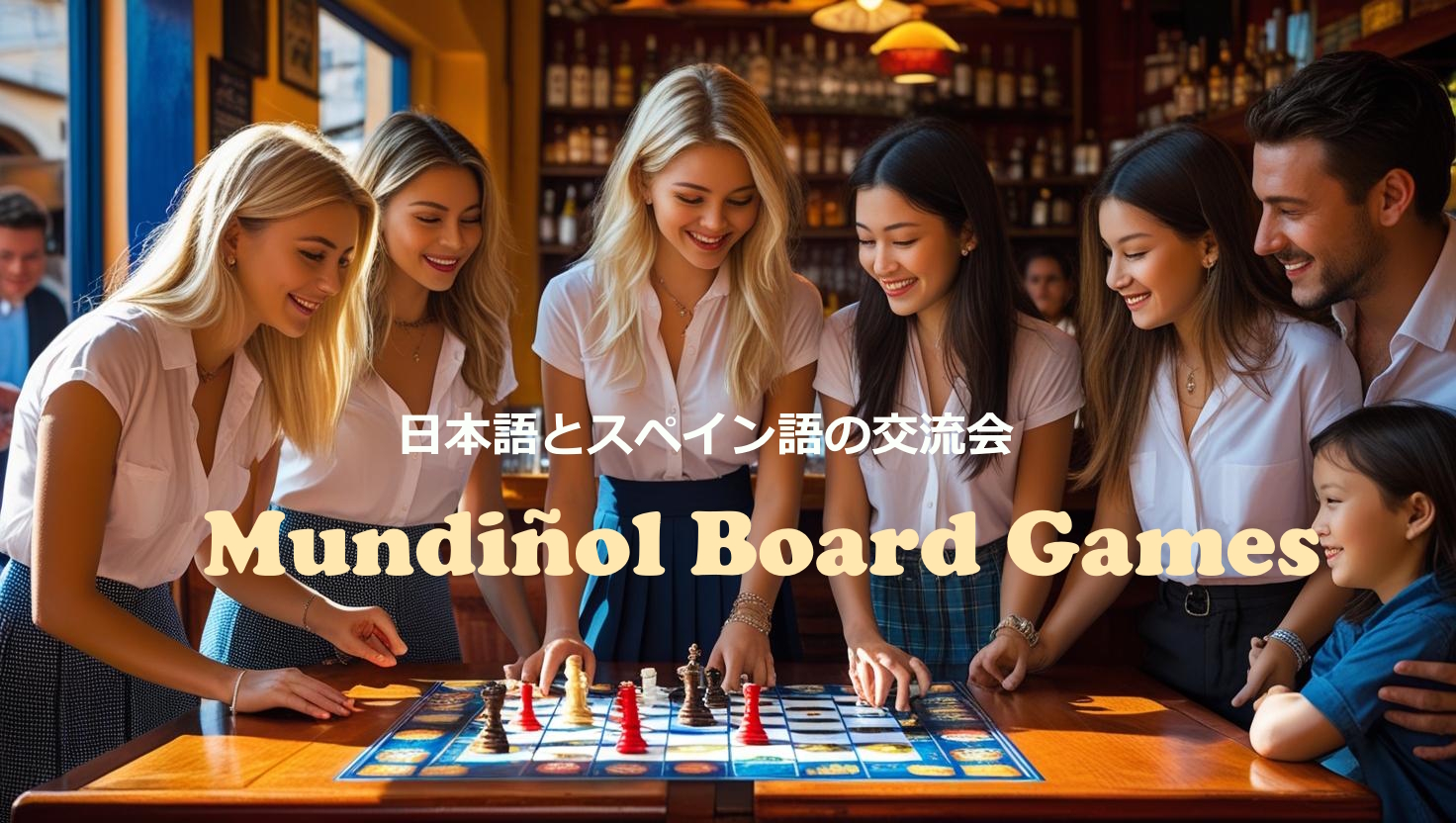
javascript board games

Just as Proto-Indo-European gave rise to Proto-Italic, which evolved into Latin and then the Romance languages, Indian Chaturanga (चतुरङ्ग) led to Chinese Xiàngqí (象棋), and eventually became Shōgi (将棋) in Japan.

JAVASCRIPT GAMES

Ancient board games each carried the unique rules of their time. Studying these historical mechanics and attempting to recreate them through JavaScript is one of the core creative themes here at MUNDIÑOL.

A long-standing community just like a family

Language Exchange in Barcelona We’re proud of the sense of security that comes from MUNDIÑOL having continued since 2008. We have many members who have been participating for over ten years. This isn’t a place just for casual hook-ups or picking up people; it’s a community for genuine connection.

It’s not uncommon for couples to meet here, start dating, get married, and have children. Those children even join our daytime weekend events. They make friends with children from different ethnic backgrounds and pick up various languages at an amazing speed that puts us adults to shame!

While the evening language exchanges are mostly attended by people in their 20s to 40s, our daytime activities often see everyone from 5-year-old children to 70-year-old grandparents joining in with their families.

If you want to learn about languages and cultures seriously but in a fun way, we’re all looking forward to you joining us!

Este es el grupo ideal para ti si...

Actualmente publicamos nuestros eventos en dos grupos de Meetup. Cualquier persona seria que valore los idiomas y la cultura es más que bienvenida.

JOIN OUR MEET-UP GROUPS!

Language Exchange in Barcelona MUNDIÑOL será el lugar perfecto para ti, especialmente si te interesa:


¡Codificando la sabiduría antigua con JavaScript!

juegos de mesa de javascript

Del mismo modo que el protoindoeuropeo dio paso al protoitálico, y este al latín hasta llegar a las lenguas romances, el Chaturanga (चतुरङ्ग) indio dio origen al Xiàngqí (象棋) chino y, finalmente, al Shōgi (将棋) en Japón.

JUEGOS DE JAVASCRIPT

Los juegos de mesa antiguos tenían sus propias reglas en cada época. Estudiar esas normas y tratar de recrearlas mediante JavaScript es uno de los temas centrales y más apasionantes de MUNDIÑOL.

Una comunidad que perdura como una familia

Language Exchange in Barcelona Estamos orgullosos de la confianza que da el hecho de que MUNDIÑOL lleve funcionando desde 2008. Muchos de nuestros miembros llevan participando más de diez años. Este no es un grupo para ligar de forma superficial; es un lugar para crear conexiones auténticas.

No es raro que parejas se conozcan aquí, empiecen a salir, se casen y tengan hijos. Esos niños incluso participan en nuestras actividades diurnas de los fines de semana. Hacen amigos de diferentes etnias y aprenden varios idiomas a una velocidad increíble que nos deja boquiabiertos a los adultos.  ❤ Véase MUNDIÑOL KIDS.

Aunque los intercambios de idiomas por la noche suelen ser para personas de entre 20 y 40 años, en las actividades diurnas es muy común ver a familias enteras, desde niños de 5 años hasta abuelos de 70.

Si quieres aprender sobre idiomas y cultura de forma seria pero divertida, ¡todos te esperamos con mucha ilusión!

Intercambios de Idiomas MUNDIÑOL

Si todavía no has venido a ningún evento de MUNDIÑOL, nuestras quedadas semanales son el lugar ideal para empezar a hacer amigos. Aunque solo hables inglés o español, no tendrás problemas para comunicarte, ya que siempre hay gente de todo el mundo que domina ambos idiomas.

¡Eres más que bienvenido, ya vengas solo o con amigos! Incluso si estás de viaje por Barcelona solo unos días, aquí podrás descubrir los rincones secretos de la ciudad hablando en tu propio idioma.

MUNDIÑOL Language Exchange

If you’ve never been to a MUNDIÑOL event, our weekly meetups are the perfect place to start making new friends. Even if you only speak English or Spanish, you’ll find plenty of people from all over the world who are fluent in both, so communication is never an issue.

Whether you come on your own or bring friends, you’re more than welcome! Even if you’re just visiting Barcelona for a few days, it’s a great chance to discover the city’s hidden gems through chats in your own language.

We generally meet up every Monday, Wednesday, and Friday evening. As you can see from the slideshow below, we get up to all sorts of other activities too! Please keep in mind that our regular evening meetups might occasionally be rescheduled, moved, or cancelled to make way for special events. To be on the safe side, do click the "NEXT EVENTS" button to check the latest details before you head out.

Por lo general, nos reunimos todos los lunes, miércoles y viernes por la noche. Como puedes ver en las fotos de abajo, ¡también organizamos muchísimas otras actividades! Ten en cuenta que, a veces, nuestras quedadas nocturnas pueden cambiar de lugar, hora o incluso cancelarse si hay algún evento especial. Por si acaso, no olvides pulsar el botón de "PRÓXIMOS EVENTOS" para confirmar los detalles antes de venir.

MONDAY / LUNES 20:45 - 22:50
The New Orleans (Pere d'Artés 10)
Metro:Virrei Amat (L5)

WEDNESDAY / MIÉRCOLES 20:30 - 22:50
Viena Paseo de San Joan (Pg. de St. Joan 26)
Metro:Arc de Triomf (L1), Tetuan (L2)

FRIDAY / VIERNES 21:00 - 23:30
Alex Bar Restaurant (Còrsega 170)
Metro:Hospital Clinic (L5)

PRÓXIMOS EVENTOS

NEXT EVENTS


You’ll find the following links available in Spanish and Japanese. We highly recommend exploring them as a brilliant way to sharpen your reading and deepen your understanding of both languages.

Exploring Gastronomic Culture

MUNDIÑOL is well-known as a study group for world languages and the cultures behind them, but we are also a community that loves exploring the history of every ingredient. Why not enjoy a unique gastronomic experience in Barcelona alongside your friends from MUNDIÑOL?

Mundiñol Gastronomy

Fancy diving into world gastronomy right here in Barcelona with the MUNDIÑOL community?

MUNDIÑOL GASTRONOMY

MUNDIÑOL is highly regarded in Barcelona for its research into Indo-European languages, the cultures of East Asia, and our weekly multilingual meetups. However, we are also renowned as a culinary meeting point where you can savour flavours from all corners of the globe.

Why not join us to share and enjoy international cuisine in Barcelona with your MUNDIÑOL friends?

All About Ginger

ginger

Ginger is a rhizome native to East Asia that has now found its way into kitchens worldwide. Although it is the underground part of the plant, it has become one of the most celebrated spices for both its culinary flair and medicinal benefits.

DISCOVER GINGER

An excellent aid for digestion, ginger is also a remarkably "sensual" spice. Since ancient times, it has been prized in the kitchen as an ideal aphrodisiac, but its appeal doesn't stop there. Ginger boasts a wealth of fascinating properties, from its rich history to its outstanding nutritional value.

The Story of Rice

rice

At MUNDIÑOL Intercultural, we don't just learn languages; we take a genuine interest in the lives and heritage of those who speak them.

 ALL ABOUT RICE 

When we sit down to a meal of rice or bread, we find ourselves curious about the plants they come from, such as the paddy fields or the wheat stalks.

Whether enjoying a paella, fried rice, or a biryani, we reflect on the lands and rice-growing cultures where they began. Through food, we discover the fascinating connections that bind our world together.

History of Buckwheat

Buckwheat is a true superfood, packed with the kind of nutrients that are perfect for modern life.

BUCKWHEAT HISTORY

Its greatest highlight is its high rutin content—a polyphenol that helps strengthen capillaries and regulate blood pressure.

Furthermore, it provides B-group vitamins to support fat metabolism and a generous amount of fibre, making it ideal for maintaining a healthy digestive balance.

Welcome to the world of tea

It is said that drinking tea regularly (especially white and green tea) has very positive effects on your health.

Welcome to the world of tea

Nowadays, much progress has been made in the study of its main components, such as flavonoids, catechins and polyphenols.

Its richness in antioxidants helps to combat the free radicals responsible for ageing.

Estudios de la cultura gastronómica

MUNDIÑOL es conocido como un grupo de estudio de las lenguas del mundo y de las culturas en las que se hablan, pero también es un grupo que explora la historia de cada ingrediente. ¡Disfruta de una experiencia gastronómica en Barcelona junto con los amigos de MUNDIÑOL!

Gastronomía de Mundiñol

¿Te apetece disfrutar de la gastronomía del mundo en Barcelona junto a los amigos de MUNDIÑOL?

GASTRONOMÍA DE MUNDIÑOL

MUNDIÑOL es conocido en Barcelona por sus estudios sobre las lenguas indoeuropeas, las lenguas y culturas de Extremo Oriente y por sus encuentros multilingües semanales. Pero también es muy reconocido como un punto de encuentro gastronómico para disfrutar de los sabores del mundo.

¿Te animas a compartir y saborear la cocina internacional en Barcelona junto a los amigos de MUNDIÑOL?

Sobre el jengibre

jengibre

El jengibre es un rizoma originario de Asia oriental que hoy se encuentra en todo el mundo. Aunque es una parte subterránea de la planta, se ha convertido en una de las especias más conocidas por su uso culinario y medicinal.

Sobre el jengibre

El jengibre es un excelente digestivo y, al mismo tiempo, una especia muy sensual. Desde la antigüedad, se ha dicho que su uso en la cocina lo convierte en un afrodisíaco ideal, pero su atractivo no se detiene ahí. El jengibre posee muchas propiedades excelentes, tanto históricas como nutricionales.

Sobre el arroz

clases particulares

En MUNDIÑOL Intercultural no solo aprendemos idiomas, sino que también nos interesamos por la vida y la cultura de quienes los hablan.

 SOBRE EL ARROZ 

Al comer arroz o pan, sentimos curiosidad por las plantas que los originan, como el arrozal o el trigo.

Y al disfrutar de una paella, un arroz frito o un biryani, pensamos en las tierras y culturas del arroz que los vieron nacer. A través de la comida, descubrimos las conexiones del mundo.

Historia del trigo sarraceno

El trigo sarraceno es un auténtico superalimento, lleno de nutrientes que vienen de maravilla para la vida moderna.

TRIGO SARRACENO

Su mayor atractivo es su alto contenido en rutina, un polifenol que ayuda a fortalecer los capilares y a regular la presión arterial.

Además, aporta vitaminas del grupo B, que favorecen el metabolismo de las grasas, y una buena cantidad de fibra, ideal para el equilibrio intestinal.

Bienvenido al mundo del té

Se dice que beber té (especialmente blanco y verde) de forma habitual tiene efectos muy positivos para la salud.

Bienvenido al mundo del té

Actualmente, se ha avanzado mucho en el estudio de sus componentes principales, como los flavonoides, las catequinas y los polifenoles.

Su riqueza en antioxidantes permite combatir los radicales libres responsables del envejecimiento.

Estudios de lingüística en Barcelona

En los encuentros de MUNDIÑOL se aprenden, practican y enseñan japonés, chino, español, catalán y otras lenguas indoeuropeas y de Asia Oriental, y también se presta atención a la historia de estas lenguas. Además, nos interesa la alimentación en la Antigüedad: por ejemplo, que en la época en que se hablaba el protoindoeuropeo la dieta era sencilla, y que cuando se hablaban las lenguas boreales, al parecer, también se consumía carne de mamut.

Historia de las lenguas itálicas

El latín es una lengua perteneciente a la rama itálica de la familia indoeuropea. Entonces, ¿de dónde proviene la rama itálica?

LAS LENGUAS ITÁLICAS

El camino que llevó del protoindoeuropeo al grupo de lenguas itálicas no fue sencillo ni lineal, sino que dio lugar a distintas teorías e interpretaciones. En especial, la «hipótesis italo-celta» sigue siendo motivo de debate entre quienes la apoyan y quienes la rechazan.

Lenguas Boreanas

Lenguas Boreanas

En el grupo de investigación lingüística de MUNDIÑOL, uno de los temas centrales es el de las llamadas Lenguas Boreanas.

LENGUAS BOREANAS

Es una macrohipótesis que propone una superfamilia lingüística del hemisferio norte que incluiría al indoeuropeo, urálico, altaico y otros.

Algunos investigadores sugieren que también abarcaría al sino-tibetano e incluso al idioma Jōmon, posible ancestro del japonés.

Macrofamilia del Asia Oriental

La Macrofamilia del Asia Oriental reúne varias hipótesis sobre una gran familia lingüística propuestas por distintos investigadores. Stanley Starosta la sistematizó en 2001, y luego George van Driem y Michael D. Larish presentaron modelos propios.

Macrofamilia del Asia Oriental

Aún no hay consenso académico, y Mundiñol destaca el modelo de Larish, que incluye al japonés y al coreano como parte central de su teoría.

Lengua protoindoeuropea

El español, catalán, francés y otras lenguas vienen del latín; el ruso, polaco y otras eslavas del protoeslavo; y el hindi, urdu y otras indoarias del sánscrito.

PROTOINDOEUROPEO

No hay registros escritos de su origen, pero la hipótesis del Kurgán, aceptada por muchos, propone que era una lengua flexiva hablada hacia 4000 a.C. por los pueblos de la cultura Yamna del Pontocaspio.

Linguistic Studies in Barcelona

At MUNDIÑOL meetups, we learn, practise, and teach Japanese, Chinese, Spanish, Catalan, and various Indo-European and East Asian languages, with a keen eye on their fascinating histories. Our interests even extend to ancient diets; for instance, the simple fare of the Proto-Indo-European era, or the days of the Borean languages when, by all accounts, mammoth meat was still on the menu.

Chronicles of the Italic Languages

Latin belongs to the Italic branch of the Indo-European language family. But one might wonder: where exactly did this Italic branch originate?

THE ITALIC LANGUAGES

The journey from Proto-Indo-European to the Italic group was neither straightforward nor linear, sparking various theories and scholarly interpretations. In particular, the 'Italo-Celtic hypothesis' remains a subject of fascinating debate between its proponents and critics.

Borean Languages

Borean Languages

Within the MUNDIÑOL linguistic research group, one of our central themes is the study of the so-called Borean languages.

BOREAN LANGUAGES

This ambitious macro-hypothesis proposes a linguistic super-family of the Northern Hemisphere, which would encompass Indo-European, Uralic, Altaic, and more.

Some researchers suggest it might even extend to Sino-Tibetan and the ancient Jōmon language, a potential ancestor of modern Japanese.

East Asian Macrofamily

The East Asian Macrofamily brings together several hypotheses regarding a vast language family. Stanley Starosta systematised the concept in 2001, followed by distinct models presented by George van Driem and Michael D. Larish.

EAST ASIAN MACROFAMILY

While academic consensus is yet to be reached, Mundiñol highlights Larish’s model, which places Japanese and Korean at the very heart of the theory.

Proto-Indo-European Language

Spanish, Catalan, and French evolved from Latin; Slavic languages like Russian and Polish from Proto-Slavic; and Indo-Aryan tongues like Hindi and Urdu from Sanskrit.

PROTO-INDO-EUROPEAN

Though no written records exist, the widely supported Kurgan hypothesis suggests it was an inflected language spoken around 4000 BC by the Yamnaya people of the Pontic-Caspian steppe.

Exploración de las culturas y las lenguas

Participa en los eventos de MUNDIÑOL y no te limites a aprender de forma superficial japonés, chino, español o catalán, sino explora de manera divertida todo lo relacionado con estas lenguas. Aprender canciones en el idioma que estudias y cantarlas en el karaoke sin mirar la letra también es de gran ayuda para el aprendizaje.

Aranés (el occitano de Cataluña)

El aranés es la lengua propia del Valle de Arán, ubicado en el Pirineo catalán.

EL IDIOMA ARANÉS

Desde la reforma del Estatuto de 2006, es lengua oficial en toda Cataluña, reconocimiento consolidado por la Ley del Aranés de 2010 que extendió su estatus más allá del Valle.

Impulsado por la política de protección lingüística de la UE, este hito histórico ha convertido al aranés en una de las lenguas minoritarias mejor protegidas de Europa.

Karaoke en Barcelona

¡Canta, baila y estudia idiomas y culturas del mundo en MUNDIÑOL!

¡Organizamos un gran evento de karaoke que dura 3 horas cada 1 o 2 meses. Se hace un sábado o domingo, de 15:00 a 18:00!

KARAOKE POLÍGLOTO

KARAOKE MEET UP

Cantamos en castellano, catalán, inglés, japonés, chino o cualquier idioma que te guste. ¡Somos políglotos, así que tenemos todo cubierto!

Exploring Cultures and Languages

Join our MUNDIÑOL events and go beyond the surface of learning Japanese, Chinese, Spanish, or Catalan. Dive deep into everything that makes these languages fascinating in a fun, hands-on way. For instance, learning songs in your target language and belting them out at karaoke without needing the lyrics is a fantastic way to boost your fluency!

Aranese (The Occitan of Catalonia)

Aranese is the native tongue of the Aran Valley, nestled within the Catalan Pyrenees.

THE ARANESE LANGUAGE

Following the 2006 Statute reform, it became an official language throughout Catalonia, a status further solidified by the 2010 Aranese Language Act, which extended its recognition beyond the Valley.

Supported by the EU's linguistic protection policies, this historic milestone has established Aranese as one of the finest examples of a protected minority language in Europe.

Karaoke in Barcelona

Sing, dance, and explore world languages and cultures with MUNDIÑOL!

Every one or two months, we host a grand 3-hour karaoke session on a Saturday or Sunday, typically from 3 pm to 6 pm.

POLYGLOT KARAOKE

KARAOKE MEET UP

Whether it's Spanish, Catalan, English, Japanese, Chinese, or any language you fancy, we’ve got you covered. We’re a polyglot bunch, after all!

¿Quieres aprender japonés en Barcelona?

MUNDIÑOL es un grupo de profesores de japonés con una amplia experiencia.

APRENDAMOS JAPONÉS

A diferencia de los profesores de japonés habituales, algunos de ellos dominan varias lenguas y son especialistas en lingüística.

Para quienes estén cansados de los métodos de enseñanza convencionales y quieran profundizar en el japonés comparándolo con otras lenguas del mundo, explorando tanto sus semejanzas como sus diferencias, MUNDIÑOL es el lugar ideal para aprender japonés.

LINKS PARA APRENDER JAPONÉS

MUNDIÑOL’s Four YouTube Channels

Do have a browse through our short videos featuring the delightful Spanish villages we’ve visited, our barbecues in Barcelona, and many more MUNDIÑOL events. Don’t forget to subscribe!


Los 4 canales de YouTube de MUNDIÑOL

¡Échale un vistazo a nuestros vídeos cortos! Podrás descubrir los preciosos pueblos que visitamos, nuestras barbacoas en Barcelona y muchos otros eventos de MUNDIÑOL. ¡No olvides suscribirte al canal!


© 2009-2025 Atsushi Miyazaki